PADI Courses in Hurghada 2026 | Best Diving Certification Guide
PADI Courses in Hurghada 2026 | Red Sea Certification Guide
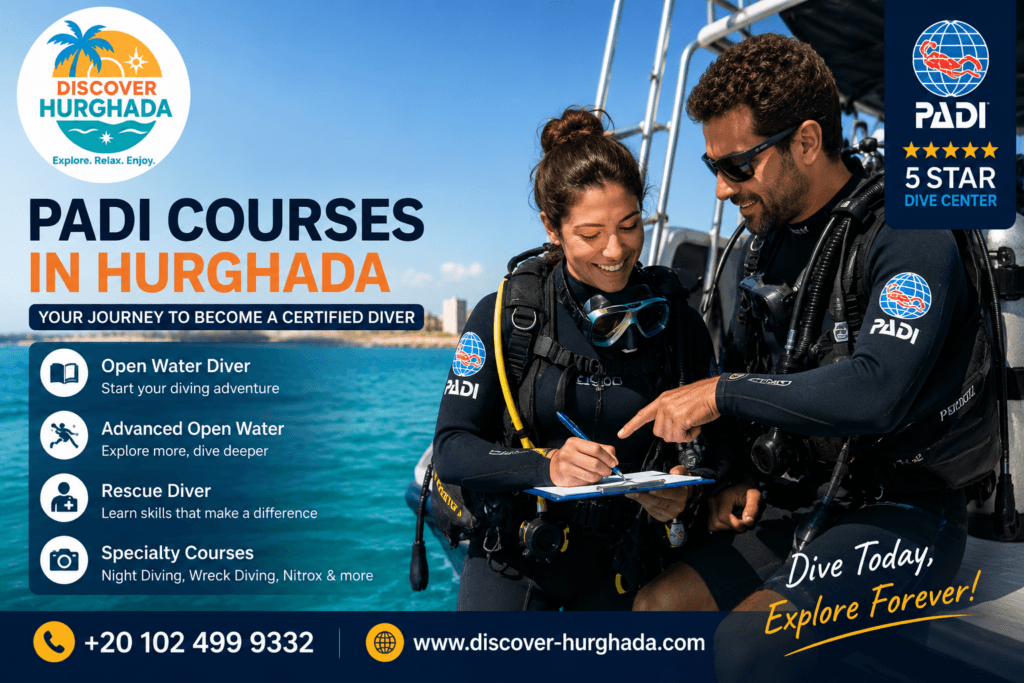
PADI Courses in Hurghada are one of the best ways to become a certified scuba diver in Egypt because the Red Sea offers warm water, clear visibility, colorful reefs, professional instructors, and beginner-friendly training conditions.
Whether you want to start with Open Water, continue to Advanced Open Water, or improve your confidence with rescue and specialty skills, Hurghada is one of the strongest Red Sea destinations for diving education.
This guide explains PADI courses in Hurghada, prices, training levels, safety tips, course duration, and how to choose the right scuba certification experience.
Quick Answer – Are PADI Courses in Hurghada Worth It?
Yes. PADI Courses in Hurghada are worth it for beginners and certified divers because Hurghada offers warm Red Sea water, clear visibility, professional dive centers, affordable course prices, and easy access to coral reefs.
What Are PADI Courses in Hurghada?
PADI Courses in Hurghada are scuba diving certification programs that teach beginners and certified divers how to dive safely in the Red Sea. Courses usually combine theory, pool or shallow-water practice, and open-water dives at reef sites around Hurghada.
What You Will Learn
- What PADI means
- Best PADI Courses in Hurghada
- Open Water course explained
- Advanced Open Water course explained
- Rescue Diver and specialty courses
- PADI course prices in Hurghada
- Best Red Sea training conditions
- How to choose a safe dive center
- Useful diving and snorkeling guides
Why PADI Courses in Hurghada Are Popular
Hurghada is one of Egypt’s most practical places to learn scuba diving because the city has daily boat trips, many dive centers, calm beginner reefs, and easy access to the Red Sea.
For new divers, the biggest advantage is comfort. The water is warmer than many European destinations, visibility is often strong, and many training sites are suitable for first-time underwater practice.
PADI stands for Professional Association of Diving Instructors. A PADI certificate is internationally recognized, which means you can use your certification for future diving trips around the world.
If you are still deciding whether diving is right for you, start by reading this local guide: Scuba Diving in Hurghada
PADI Open Water Courses in Hurghada
The PADI Open Water course is the most popular scuba certification for complete beginners. It is designed for people who want to become certified divers, not just try one introductory dive.
What You Learn in the Open Water Course
- How to breathe underwater safely
- How to use scuba equipment
- Buoyancy control
- Mask clearing
- Underwater communication
- Basic dive planning
- Emergency procedures
- Responsible reef behavior
Most Open Water courses in Hurghada take around 3 to 4 days, depending on your schedule, theory progress, sea conditions, and the dive center’s plan.
For general diving background and local safety tips, use: Diving in Hurghada
Advanced PADI Courses in Hurghada
After Open Water, many divers continue with Advanced Open Water to build confidence, improve control, and experience different types of dives.
Advanced Open Water
Advanced Open Water usually includes deeper diving, navigation, buoyancy practice, and adventure dives. In Hurghada, this can be especially useful because the Red Sea offers reef walls, boat dives, and varied underwater conditions.
Rescue Diver
Rescue Diver training focuses on awareness, prevention, stress control, and emergency response. It is one of the most valuable courses for divers who want to become more responsible underwater.
Specialty Courses
Depending on the dive center, Hurghada may offer specialty courses such as deep diving, drift diving, buoyancy, underwater photography, nitrox, and wreck-related training.
Best Conditions for PADI Courses in Hurghada
The best PADI training conditions are calm water, good visibility, professional supervision, clear briefings, and reefs that match the student’s level.
Hurghada works well because many boat routes combine shallow coral areas, snorkeling stops, and easy underwater practice locations. This makes it easier for students to build confidence step by step.
For travelers who want to understand Hurghada’s reef and snorkeling conditions before booking, this guide helps: Hurghada Snorkeling Trips
PADI Courses in Hurghada Prices
PADI course prices in Hurghada vary depending on the course level, dive center, instructor quality, equipment, boat standard, certification fees, and what is included.
Do not choose only by price. For diving courses, safety, instructor attention, equipment quality, and honest communication matter more than the cheapest offer.
How to Choose the Right PADI Dive Center in Hurghada
A good dive center should explain the course clearly before you pay. You should know what is included, how many days the course takes, what equipment you will use, and whether certification fees are included.
Check Instructor Communication
A professional instructor should make beginners feel calm, not rushed. If the explanation feels unclear before booking, that is a warning sign.
Check Equipment and Boat Quality
Good equipment is essential for safe training. Boats should also be organized, clean, and suitable for diving operations.
Ask About Group Size
Smaller training groups are usually better for beginners because the instructor can give more attention to each student.
PADI Course or Snorkeling Trip?
If you only want a relaxed sea day, snorkeling may be enough. If you want to breathe underwater, learn real scuba skills, and earn certification, a PADI course is the better choice.
For non-divers or family members joining your trip, these snorkeling guides are useful:
Related Diving and Red Sea Guides
Start Your Red Sea Diving Journey
Explore scuba certification, reef trips, snorkeling, private sea tours, and unforgettable Red Sea experiences with Discover Hurghada.
🤿 Scuba Diving
Learn diving skills and explore Red Sea reefs with professional guidance.
🏝️ Snorkeling Trips
Enjoy Giftun, Orange Bay, reef stops, dolphins, and crystal-clear water.
Final Answer – PADI Courses in Hurghada
PADI Courses in Hurghada are among the best scuba certification experiences in Egypt because the Red Sea combines warm water, clear visibility, coral reefs, professional instructors, and beginner-friendly training conditions.
If you want to become a certified diver, Hurghada gives you a practical, beautiful, and affordable place to learn while exploring one of the most famous diving regions in the world.
Discover Hurghada helps travelers make smarter Red Sea decisions with honest local guides, practical advice, and clear trip planning support.
FAQ About PADI Courses in Hurghada
Are PADI Courses in Hurghada good for beginners?
Yes. Hurghada is excellent for beginners because the Red Sea offers warm water, good visibility, reef training areas, and professional scuba instruction.
How long does a PADI Open Water course take in Hurghada?
Most PADI Open Water courses in Hurghada take around 3 to 4 days depending on the dive center, schedule, theory, and sea conditions.
How much do PADI Courses in Hurghada cost?
Prices vary by course and dive center. Open Water courses often range from about €280 to €450, while introductory dives are usually cheaper.
Do I need diving experience before a PADI course?
No. The Open Water course is designed for beginners, while Advanced and Rescue courses require previous certification.
Is Hurghada better for diving or snorkeling?
Hurghada is strong for both. Snorkeling is easier for casual visitors, while PADI courses are better for travelers who want real underwater skills and certification.